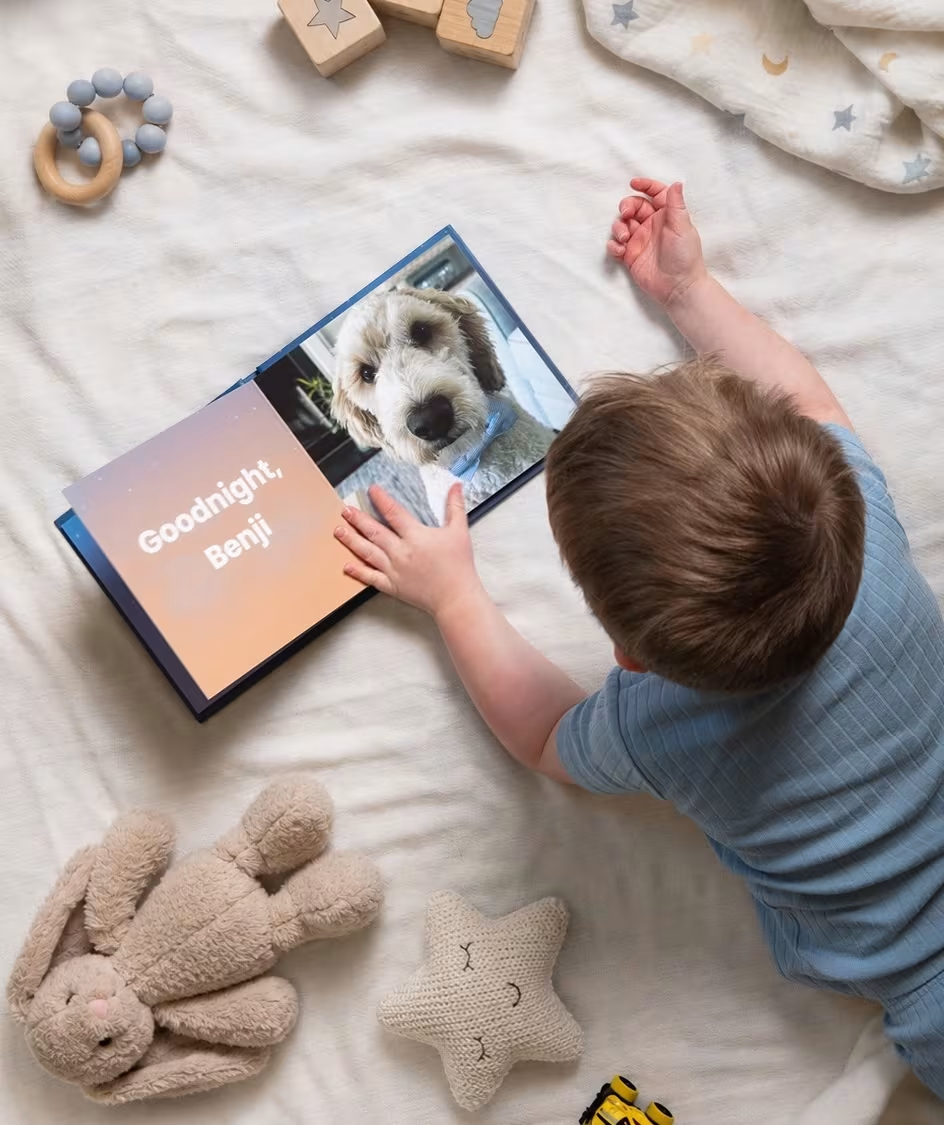
Today, most parents are sitting on an enormous archive of their children’s lives. Somewhere amongst the group chats, grocery lists, and shared calendars, your camera roll is quietly holding thousands of special moments on your phone. Laughing in the swing at the park, muddy boots wading through the puddles, selfies with Grandpa, a toddler who fell asleep mid-bite of spaghetti. These images matter to you in a way that is hard to explain to anyone who was not there. But here is the uncomfortable truth: even though we have these moments at our fingertips, most of them will rarely be looked at again. They will sit in digital storage, backed up and technically safe, but fading from our memories until they belong firmly in the past.
The good news is that this is actually a solvable problem. Turning those photos on your phone into something a child will actually pick up, flip through, and ask for again tells that child something really important. It says their experiences are worth remembering, worth celebrating, and worth returning to. In this post, we’ll dive into why that matters so much for young kids, why your camera roll alone rarely gets the job done, and what you can actually do this week to change that.

Researchers who study child development have spent decades looking at what happens when kids regularly see themselves in family photos. Psychologists who work with photography as a therapeutic tool have found that children build a sturdier sense of identity and belonging when they can look at a picture and recognize their own place inside the family unit. One well known 1975 study from Jerry Fryrear and Mary Ammerman followed a group of fourth graders that teachers had identified as having low self-esteem. Through a period of five weeks, the children took photos of themselves and their experiences and collected the prints. By the end of the study, those same teachers found a measurable increase in the children’s behaviors related to positive self-esteem…a 37% increase, to be exact. Incredible, considering the control group had just a 10% increase. These children were not just told they mattered, they were shown it, again and again, in images they could hold in their hands and keep with them.
That gap between being told and being shown explains a lot about why a folder of images on a phone rarely produces the same effect as a photo displayed on a wall or a book kept on a shelf. Specialists in this area have pointed out that being photographed with love is only half of the equation. A child should also see those images regularly for the message to sink in and take hold. A beautifully composed photo buried three thousand images deep in an app cannot do that work if nobody ever opens the app to find it.
This is where a lot of loving, well-intentioned parents get stuck. You take the photos. You back them up responsibly. But the images stay locked inside a device that you want your child having limited experiences with, which means all of that careful documentation is doing very little for the child it was meant to celebrate. Family memories only start doing real work once they are pulled out of storage and placed somewhere a child can actually reach on their own.

A writer for Slate captured this tension well when she described her phone as a robust repository of her children's early years, hundreds of gigabytes of videos and photos that travel with her from device to device every time she upgrades. She is right that there is nothing wrong with documenting a childhood this thoroughly. The instinct to capture every moment one can comes from a place of love rather than excess. The trouble shows up later, once the capturing stops and all of those images simply sit there, unseen and unused.
Once photos are safely backed up, most of us stop thinking about them entirely. A generation of children is growing up more photographed than any before it, and yet a huge share of those images never make it in front of the very kids they document. The camera roll becomes a kind of digital attic: stuffed full, valuable, but almost never visited.
There is another important layer worth mentioning here. Several parenting writers have pointed out that mothers in particular tend to disappear from their own family photos, since they are usually the ones holding the phone or camera. In this Scary Mommy post, writer Melissa Fenton described flipping through twelve scrapbooks on her living room bookshelf and estimating she would need to work through at least seven of them before finding a single photo of herself. When she finally found one, it was not a candid shot of just her as a person. It was a photo from her hospital bed on the day she gave birth, the only evidence of her in years of albums built almost entirely around the moment she became a mother rather than any of the years since. Family memories are supposed to include everyone who was actually there, and a child looking back years from now will want to see who was with them throughout it all, not just themselves.
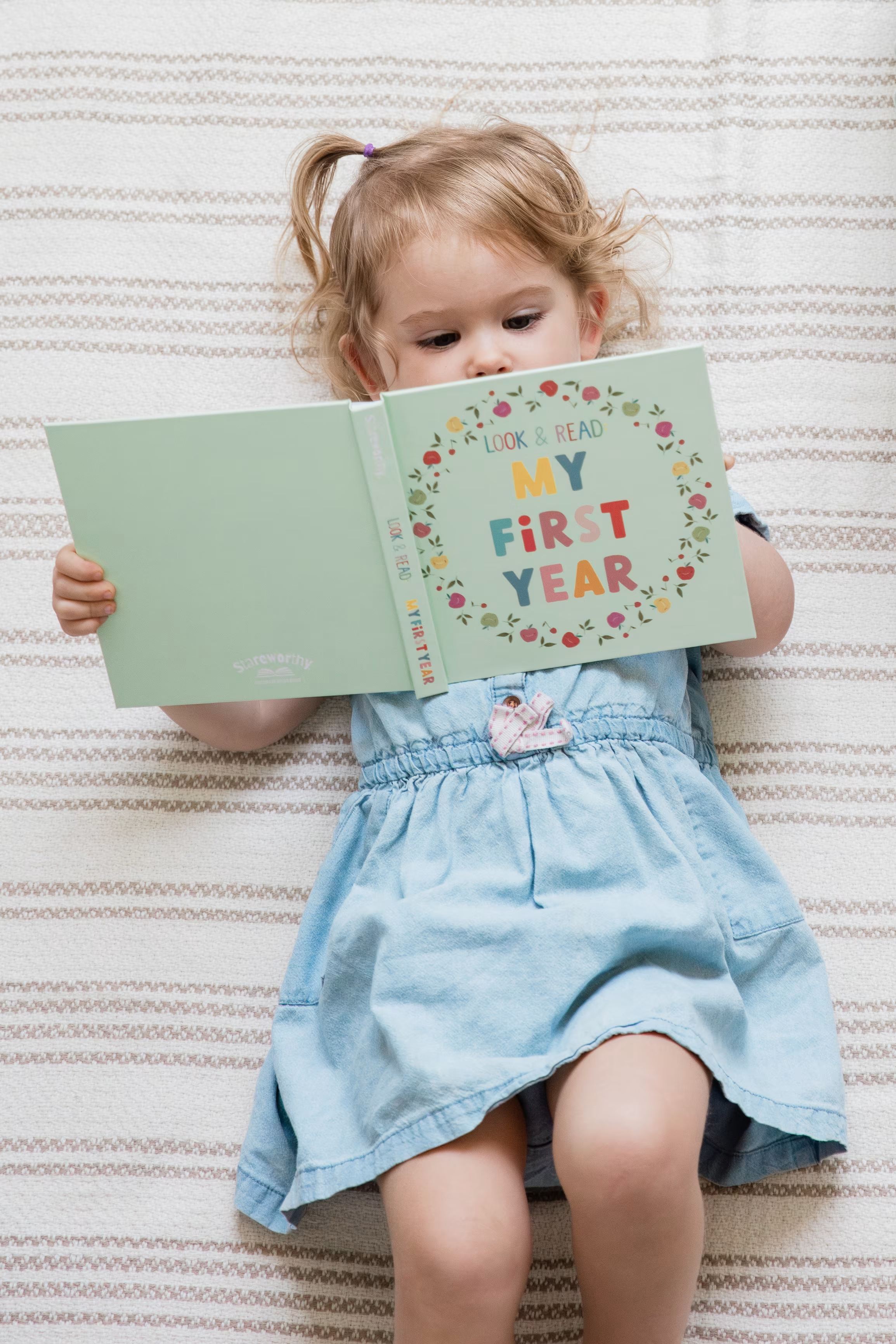
Start by handing the phone over occasionally, in both directions. Ask someone nearby to photograph you together with your kids instead of always standing behind the lens, and let your child take a few photos of their own once in a while! Kids tend to engage far more with family photos when they had some hand in making them, whether that means posing for a silly shot or holding the camera themselves for a minute. It turns picture-taking into something shared rather than something that simply happens to them.
Next, get a rotating handful of your favorite photos off the screen and into physical space. You can pick a few standout shots each season and print them, whether that means a proper wall display or in photo books/albums. Children who grow up surrounded by displayed family photos and photo albums absorb something an isolated experience with a screen cannot communicate. Every time they walk past a familiar face on the wall, they get a small, quiet reminder that they belong to something bigger than themselves.
The most effective step, though, is giving those photos a format your child will actually want to return to on their own. This is where photo books for kids earn their keep. A folder of images is passive. A child has to be handed the phone, shown the photo, and usually loses interest within a minute. A book behaves completely differently. Kids ask for their favorite books at bedtime. They pull books off low shelves without any help. They flip to the same page over and over because of how it makes them feel. When the focus of that book is your own child, built from your own family memories, that pull becomes even stronger. A custom photo storybook made from real family moments gives your child an actual reason to keep coming back to the images that would otherwise sit untouched in your camera roll.
There is real substance behind that appeal, and not just charm. Combining a child's own photos with simple, age-appropriate storytelling supports early language development, helps kids recognize familiar faces and routines, and reinforces the sense of security researchers keep finding in children who regularly see themselves reflected in family imagery. A well-made keepsake like this accomplishes something a camera roll alone never could, because it puts the child inside a story they can hold, reread, and eventually pass down.
You do not need to convert your entire photo collection at once. Pick a natural milestone or event: a birthday, the end of a school year, the arrival of a new sibling, that special day at the zoo, and build something small around it. Whether you choose a simple, quick way to make a children’s book or decide to do something much heftier, you can create something really special for your little one(s).
The families who do this well tend to treat it as an ongoing rhythm rather than a single big cleanup. Set a recurring reminder every few months to look back through your camera roll and pull out the photos that made you laugh, or the ones that captured something real rather than something posed. Turn a handful of those into a new print, a new page in an album, or a new photo book built around whatever your child is into that season. Over time you end up with a small shelf of keepsakes that tell the actual story of your family, built entirely from photos that were already sitting on your phone the whole time, waiting to be used.
None of this means abandoning digital storage. Backing everything up still matters, and there is nothing wrong with a camera roll that holds thousands of images. A backup, though, is not the same thing as a memory a child can hold, request, and return to on a rainy afternoon. The families who get the most out of their photos treat their phone as a starting point for their favorite family moments, not a final resting place.
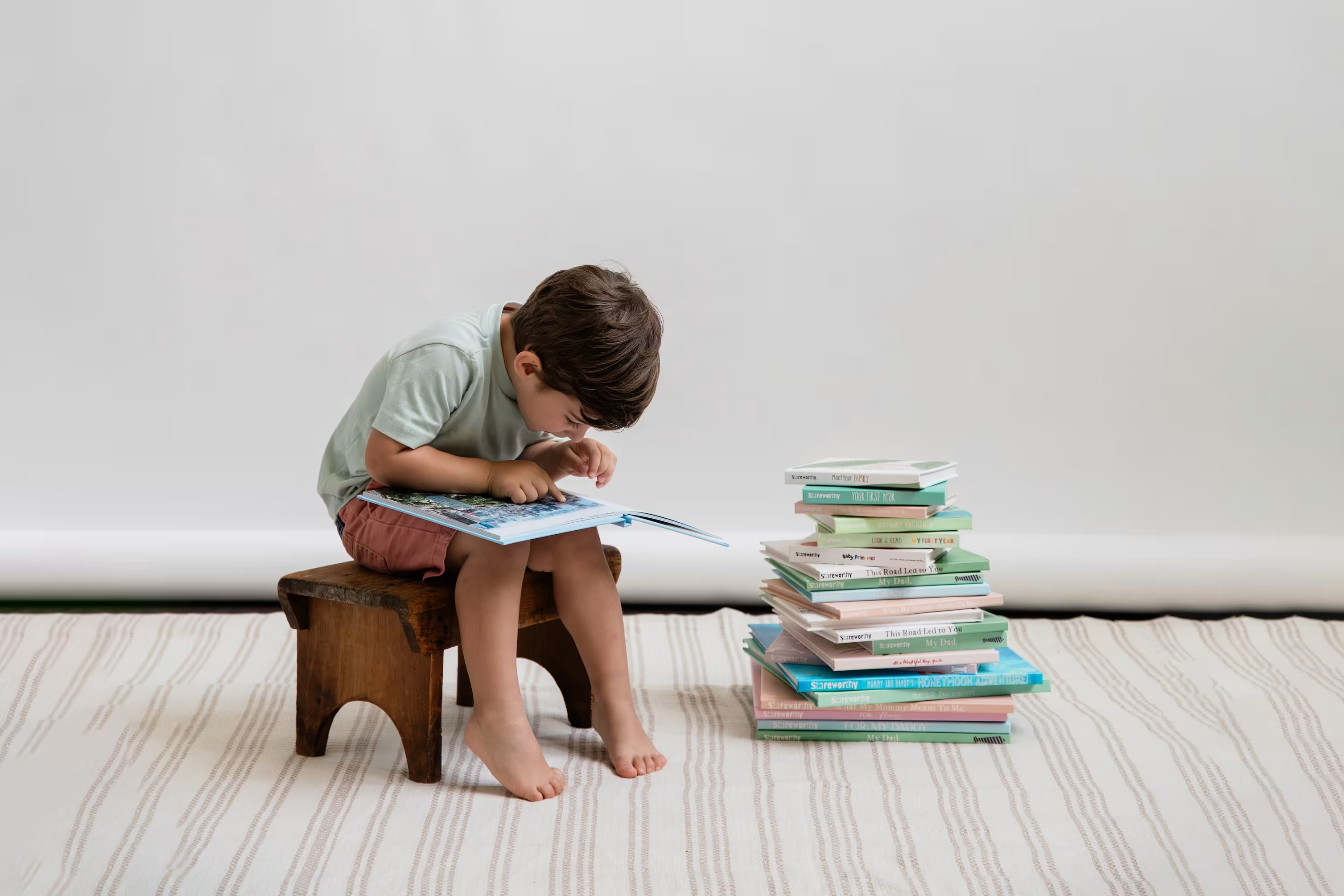
Somewhere in your camera roll right now is a photo your child would love to see again, and probably several dozen more they have never seen at all. Pulling even a handful of those images out of storage and putting them somewhere your child can interact with fully on their own terms turns an ordinary photo collection into something with real staying power. It does not need to take a massive project. All it really needs is one small, printed, held object, and the willingness to finally put the photos you already have to good use.
You do not need hundreds of images. A focused book built around a single season, milestone, or relationship, using somewhere between fifteen and thirty photos, tends to hold a child's attention far better than an exhaustive collection ever could.
Even very young toddlers respond to photos of familiar faces, so there is no real minimum age to wait for. Sturdy, durable books tend to work best for children under three, while older kids can handle more detailed storytelling built around their own photos and milestones.
Both have a place! Home printing works well for casual, rotating displays around the house. A professionally produced photo book, on the other hand, tends to hold up better to years of repeated handling and reads more like an actual keepsake your child will want to revisit.
Let them help choose which photos go into a book or album, and occasionally hand them the camera or phone. Kids consistently engage more with images they had some hand in creating or selecting themselves.
Start small. Pick one recent season or milestone, pull ten to twenty photos from it, and turn those into a printed keepsake before moving on to the next batch. Trying to sort an entire camera roll in one sitting is usually what stops people from starting at all.