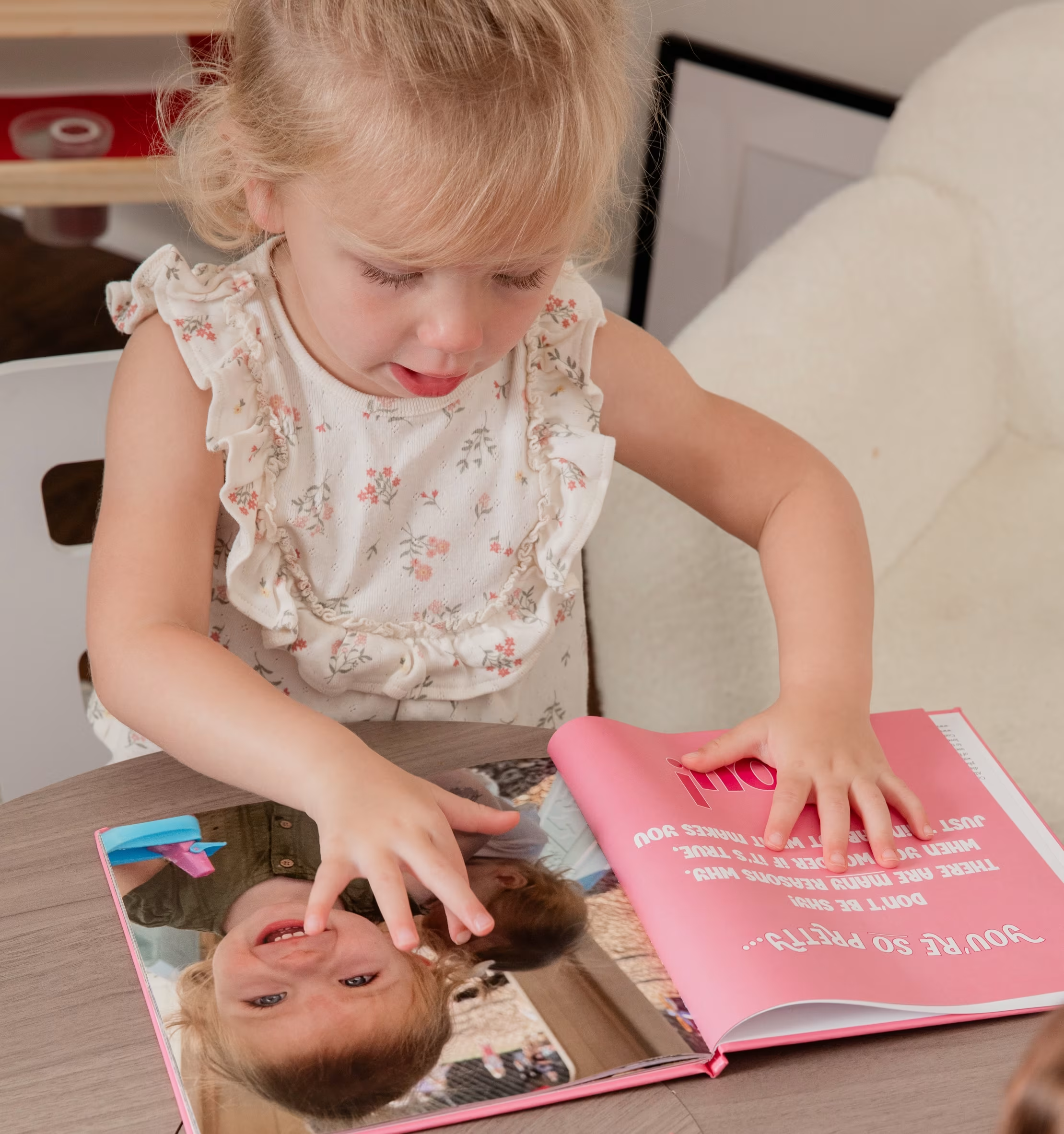
Hand a toddler a phone with the camera roll open, and watch what happens. Within seconds, small fingers are swiping toward one thing: pictures of themselves. Ask any parent and you'll hear a version of the same story. Their child skips right past the cartoon clips and the dog videos to find themselves instead, grinning at the same photo for the fifth time in a row.
This isn't a fluke, and it definitely isn't a sign that we're raising a generation of tiny narcissists. It's one of the most well documented behaviors in early childhood, and researchers have spent decades trying to understand it. Kids looking at family photos, especially pictures of themselves, is closely tied to how they build identity, memory, and a lasting sense of belonging. Understanding why this fascination exists can change the way parents think about the photos they take and how they choose to display them at home.
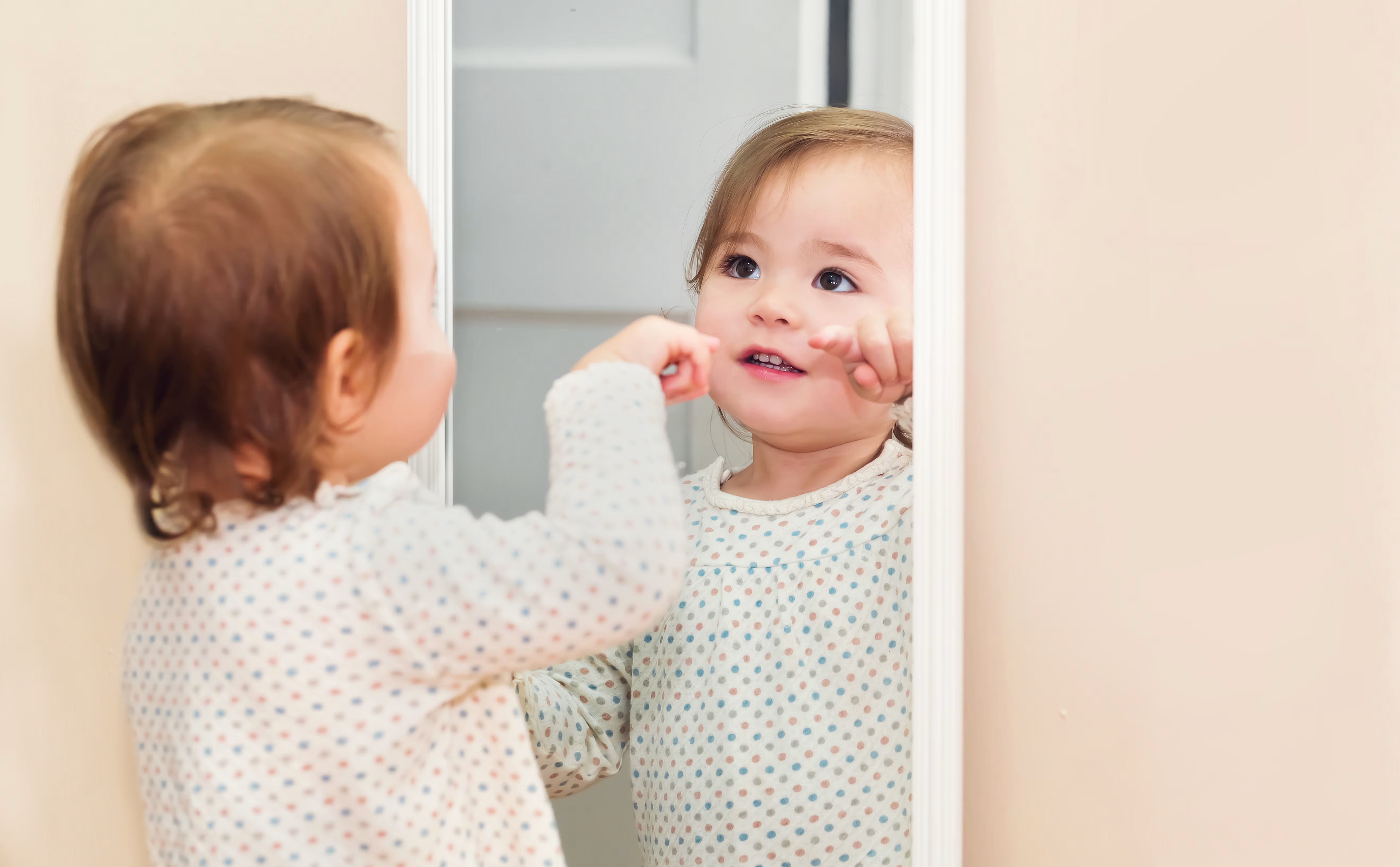
Long before photographs existed in abundance, children were captivated by their own reflection. Researchers have used mirrors for decades to study when and how children develop self-awareness, a milestone known as mirror self-recognition. Most babies begin recognizing themselves in a mirror around eighteen months old, and psychologists consider that moment one of the clearest early signs that a sense of self has taken shape.
A 2024 study from the University of Texas at Austin, published in the journal Current Biology, added a fascinating layer to that picture. Researchers led by developmental psychologist Jeffrey Lockman found that babies who were prompted to touch their own faces, using a small vibrating disc placed on the cheek or forehead, recognized themselves in a mirror roughly two months earlier than babies who didn't have that experience. Their conclusion was that self-recognition isn't something that simply switches on with age. It's built through hands-on, physical experience of one's own body, which means touch plays a real and measurable role in how quickly a sense of self develops.
This matters for photographs because a photo works, in a way, like a portable and permanent mirror. Once a child understands that the image in front of them actually is them, that image becomes endlessly interesting to study. It's part of why a personalized baby milestone photo book tends to become such a well loved object in a toddler's hands. It gives a child ongoing, independent access to the exact kind of self-recognition their brain is already primed to seek out.
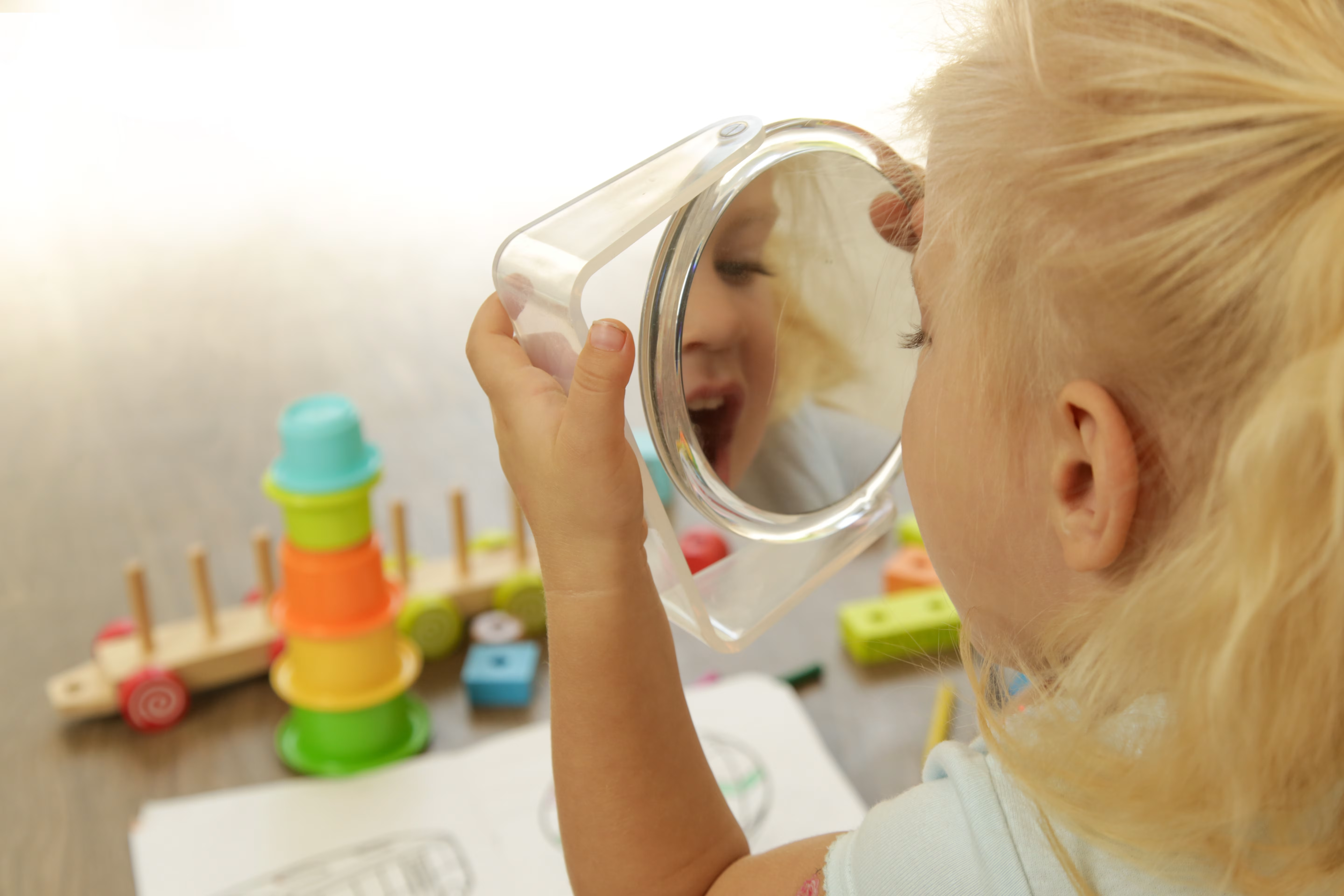
Ask any parent who has handed over a smartphone for thirty seconds, only to discover ninety blurry close-ups of an eyebrow later. This exact phenomenon was documented by the Associated Press, which interviewed Wichita mother Brandi Koskie about her three-year-old daughter Paisley's habit of secretly snapping dozens of extreme close-up selfies on her mother's phone whenever it was left unattended.
In that piece, Deborah Best, a professor of cognitive developmental psychology at Wake Forest University, explained that toddlers' fascination with their own image is natural and rooted in the same instinct that draws them to mirrors. She also noted that watching a photo or video of themselves repeatedly can help move an experience from short-term into long-term memory, in much the same way that reading a favorite bedtime story again and again helps a child process and hold onto it.
There's a flip side worth mentioning too. Best pointed out that the instant gratification of digital photos, where a child can demand to see a picture the second it's taken, can make it harder for young kids to practice patience. Jason Michael, a 32 year-old father of two, was quoted in the same article expressing his worry over whether his children would value images of themselves when taken in such abundance. Referring to a special photo of himself as a baby laying on a blanket, he said, "I know everything about that photo. But there are 20,000 photos of my kids, so will it have that same emotional impact for them?" There are some simple workarounds, like saving new photos to look at together later either digitally or in a photo book, during a calmer moment like right before bed, rather than handing over the phone the instant the shutter clicks. That small shift turns a quick glance into a slower, shared ritual, and it tends to be more meaningful for everyone involved. It's also one of the main motivations behind Stareworthy Custom Children's Books .

Self-recognition explains part of this behavior, but not all of it. Family photographer Luke Munro, who has spent years photographing children during family sessions, has identified several patterns he sees again and again once the camera comes out, and they line up closely with what child development experts observe elsewhere.
1. Attention: Children often receive focused, positive attention the moment a camera comes out, and Munro has pointed out that this attention alone can feel wonderful to a small person who is usually competing for adult focus with siblings, chores, and phones.
2. Imitation: Kids are natural mimics, and when they see parents or older siblings posing for photos, they want in too, partly because it makes them feel grown up and included in something adult.
3. Creativity & Play: These are major draws. Making funny faces, trying out a new pose, or inventing an imaginative idea for a picture is its own kind of game, and kids often feel genuine pride once they see the finished result. Perhaps his most useful observation speaks directly to the benefits of family photos for children over the long term: when kids see a printed photo of themselves on a wall or shelf at home, every time they walk past it, the image quietly reminds them of their place and significance within the family.

The psychological groundwork for all of this starts early. A child's self-concept, meaning how a child fundamentally feels about who they are, begins forming in infancy and is shaped heavily by their environment and the people around them. Children who consistently receive warmth, encouragement, and a stable home environment tend to develop what psychologists call a positive self-concept: the belief that they are capable, likable, and worthy of good things.
Family photos and child development are connected in a very concrete way here. A child who regularly sees themselves reflected back, literally, in framed pictures around the house is getting a steady, quiet message: you exist, you belong, and you're part of something bigger than yourself. This is part of why child development researchers so often describe home displays of family photos for kids as identity-building tools rather than simple decoration. Growing up surrounded by images of themselves alongside parents, siblings, and grandparents helps a child answer two of the biggest indirect questions of early childhood: who am I, and where do I fit?
This is also where family photos do something that goes beyond the individual child. A photo of a birthday party, a beach trip, or a Sunday dinner isn't just a picture of faces. It's evidence of shared experience. When a child points at a photo and asks who's in it, or recounts the story behind it, they're practicing something researchers describe as the "remembered self," building an internal narrative of their own life using the memories and stories the adults around them help supply. A custom family photo album organized around specific trips or milestones can make this kind of storytelling even easier, since a child can flip straight to a memory and ask about it on their own.
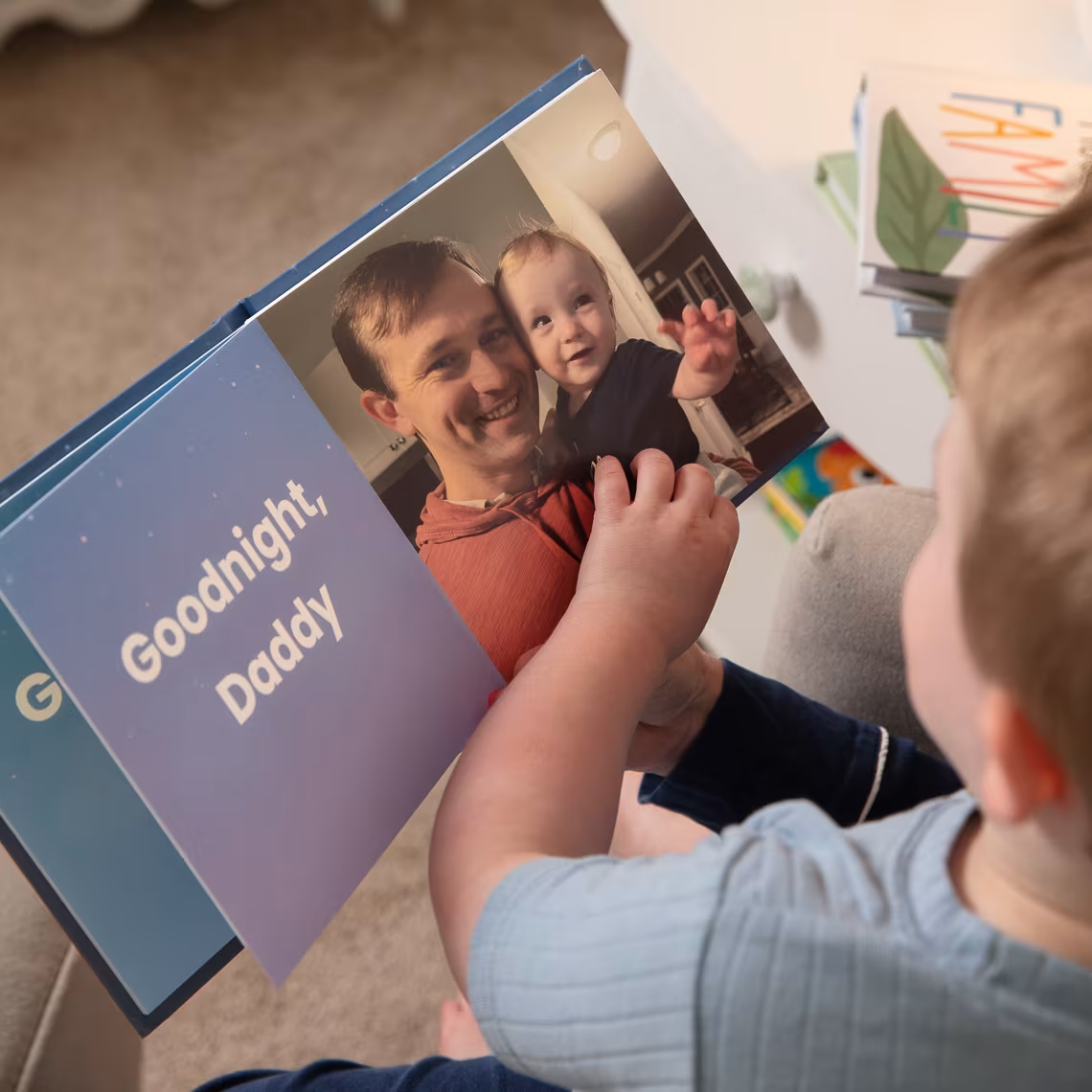
There's a common trap many parents fall into without realizing it. Because one parent is usually the one holding the camera, that parent quietly disappears from the family's own photo history. Years pass, and a family can end up with thousands of photos of the kids and almost none of the person who was there for nearly every one of those moments.
The fear underneath this is worth naming directly. It's the fear of a grown child someday flipping through old photo albums or camera rolls, hoping to see what a parent or grandparent actually looked like at a certain age, during a certain stretch of life, and coming up empty. Faces change, and memory tends to soften the exact details that a photo would have preserved precisely. A parent who was present every single day can become strangely hard to picture clearly once enough time has passed, especially if there was never a photo of them in the middle of ordinary life, only a handful of posed shots from holidays.
This matters just as much for family connection as pictures of the kids themselves. Kids don't only want to see pictures of themselves. They want to see themselves with the people they love, captured as those people actually were, tired after a long day, laughing at something silly, caught mid-sentence, unposed. A photo of a child alone is nice, but a photo of that same child beside a parent or grandparent, at that specific age and stage of life, becomes something closer to proof that a relationship existed and mattered. If one person in the family is consistently missing from the photos, that absence becomes part of the story too, whether it was intended or not.

Once you understand how much children get out of seeing themselves and their families in photographs, it becomes worth being a little more intentional about it. A phone holding thousands of photos, buried in a camera roll nobody ever scrolls back through, doesn't offer a child the same benefit as a handful of images they can hold, point to, and revisit on their own terms.
This is where printed and displayed photos genuinely outperform digital ones for young children. A family photo book that a child can pull off a shelf and flip through independently gives them direct access to their own history in a way a locked phone never will. A printed photo wall near a child's bedroom or the kitchen table can turn quiet, in-between moments, like waiting for breakfast or getting shoes on, into small, repeated chances for a child to see themselves and their family reflected back at them. Even something as simple as rotating prints of recent family memories displayed somewhere a child can reach gives them a daily touchpoint they can return to without needing an adult to unlock a device first.
None of this needs to be complicated or expensive. What matters most is consistency: photos that are actually printed, displayed, and revisited, rather than photos that exist only as a number in a camera roll total. The goal is to make sure the images that do exist are ones your child can genuinely return to, again and again, because that repetition is exactly what builds the sense of identity and belonging researchers keep finding at the center of this whole behavior.
Most children begin reliably recognizing their own reflection, and by extension their own photographed image, somewhere around eighteen months old. Some show early signs of interest even before that, though true self-recognition tends to solidify closer to their second birthday.
Yes, and it's actually a healthy sign. Repeated viewing helps move memories from short-term to long-term storage and gives children a chance to practice recalling and narrating their own experiences, which supports both memory and language development.
Generally, no. This is a well documented and common stage tied to a child's growing sense of self. If it becomes a source of frustration, such as a child demanding to see every photo the instant it's taken, it can help to introduce a short wait, like looking at new photos together after dinner instead.
Make a habit of handing the camera to someone else occasionally, using a timer, or simply taking selfies with your kids even when you feel camera-shy. Years from now, your children are far more likely to treasure a slightly imperfect photo that includes you than a perfectly composed one that doesn't.
For young children specifically, yes, largely because of accessibility. A printed photo or photo book is something a child can hold, explore, and revisit independently, while a digital photo library usually requires an adult's permission and a locked device just to get started.