The start of a new school year is about so much more than shopping for supplies and settling back into a routine. For young children, it marks a real transition— another sign of just how quickly they are growing, changing, and becoming more of themselves. Parents often remember their child's first days of preschool, kindergarten, and elementary school for years afterward, usually long after their child has forgotten the details entirely. That is where back to school traditions come in. Small, repeatable rituals can help children approach the first day (and for every school year that follows) with more excitement, familiarity, and a stronger sense of connection to their family. The good news? The most meaningful first day of school traditions are often the simplest ones, repeated year after year until they become part of a family's story. They don't have to be complex.
Below are 15 back to school traditions for kids and families that you can adapt to fit your own personalities, schedules, and budgets, and lifestyle. Pick a few that feel right for your family this year! You can always add more as your children grow.
Before the school year traditions begin, consider marking the end of summer with a small ritual of its own. This could be a favorite dinner, a backyard picnic, a family movie night, an ice cream outing, or simply a conversation at the table about everyone's favorite experience from the summer season. It doesn't have to be anything extravagant, it is simply to create a moment that says summer is ending and something new is beginning— something exciting! Predictable rituals like this one give children a sense of what to expect during a season of change, which researchers at ZERO TO THREE note can help young children manage the unsettling feelings that often come with transitions. Over time, this becomes one of those back to school activities for families that children look forward to before they even fully understand why. Ask your child what they want to do to say goodbye to summer this year, and let their answer guide the tradition.

Choose one breakfast that becomes forever associated with the first day of school. It does not need to be complicated. Pancakes shaped like stars, a favorite cereal saved just for this occasion, or a plate of "lucky" first-day donuts can all work equally well. What makes this tradition meaningful is not the food itself, but the repetition. When a child sees the same plate, smells the same breakfast, and hears the same first-day song or phrase year after year, it builds a comforting sense of familiarity right before they walk out the door. It helps them know that it's all going to be ok, even if they're a little nervous about the unknowns of starting a new year. Many parents find that this becomes one of the easiest back to school ideas to keep going, since it takes very little planning once the core "tradition" is decided. If your child helps choose or even helps make the breakfast, it becomes something they have ownership over, which can make the morning feel a little less like an obligation and a little more like a celebration that they are part of.
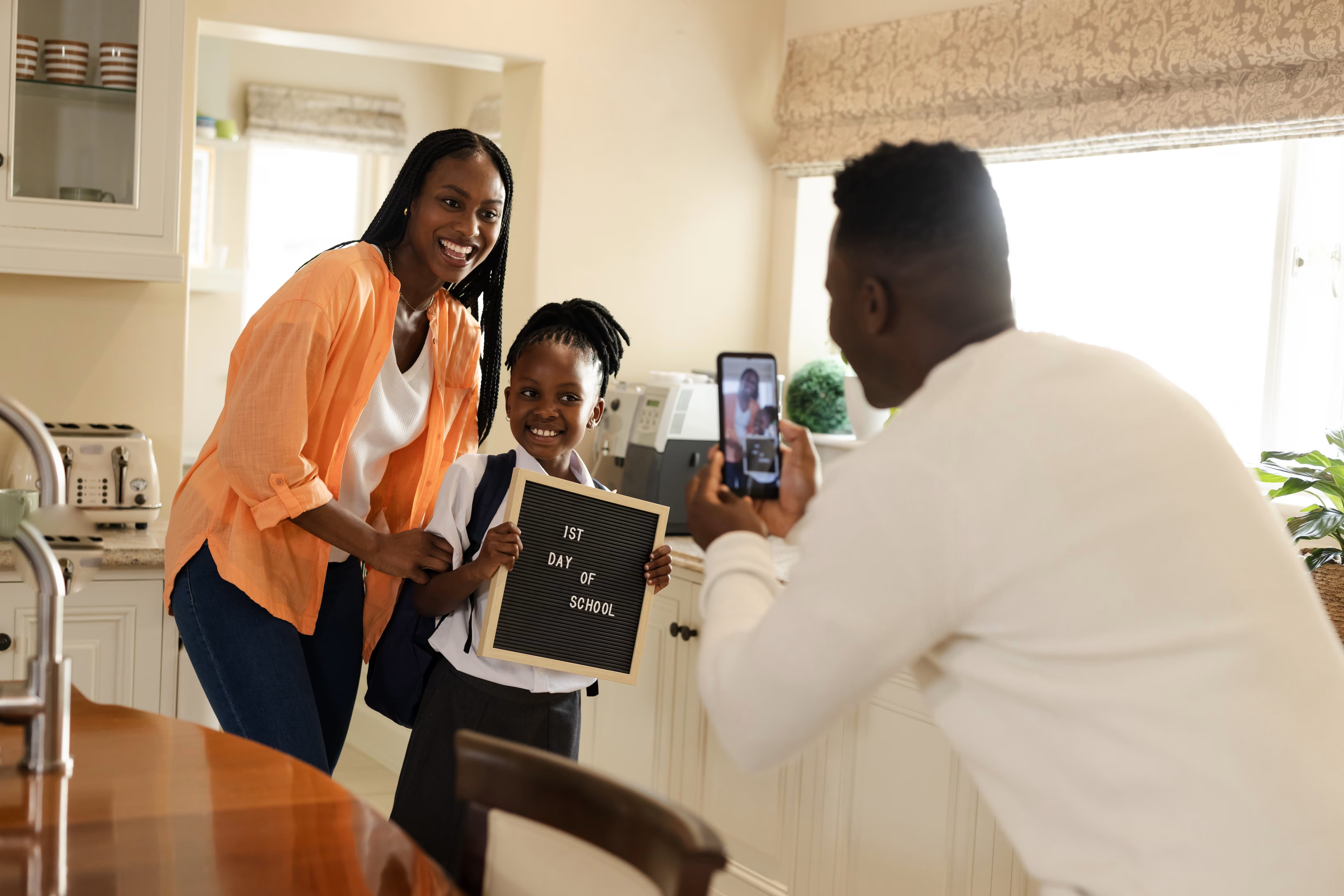
The classic first-day photo is a back to school tradition for a reason. Photographing your child in roughly the same spot each year, whether that is the front porch, a favorite tree, or the mailbox at the end of the driveway, creates a simple but powerful record of how much they grow and change. A few small adjustments can make this tradition even more meaningful. For example, alongside the traditional posed picture, try capturing a candid shot of your child mid-laugh, mid-run, or simply being themselves. Photograph the small details too: the backpack they picked out, their new shoes, their lunchbox, hairstyle, or their handwritten name on a folder. These details often mean more years later than the posed photo does. Of course, the back-to-school and last day of school signs are classic as well. Being able to write in your personal details to capture and look back on later? Priceless!
Quick Tip: Keep the photos somewhere that you can easily find each year. A simple folder or dedicated album, labeled by grade, is often all it takes to turn this into a lasting family record.

Of all the back to school traditions for kids on this list, this is one of the most worthwhile. Sit down with your child before the first day and ask them a short list of the same questions every year. Their answers, and how those answers change, become a genuinely fascinating record of who they are becoming. This is when we should all feel lucky to have handy video cameras in our pockets all the time. Can you imagine how cool it would be to look back on our own videos like that? Or to share them with our kids? Video is definitely one of the most easy and valuable ways to preserve moments.
Consider asking your child questions like:
Open-ended questions like these do much more than create a keepsake. According to NAEYC, asking children open-ended questions and giving them time to respond supports their vocabulary and their ability to express increasingly complex thoughts. Record or write down their answers exactly as they say them, typos, mispronunciations, and all. If you're looking for more on why these small moments of conversation matter so much, Stareworthy has written about why kids' own words and stories are worth preserving.
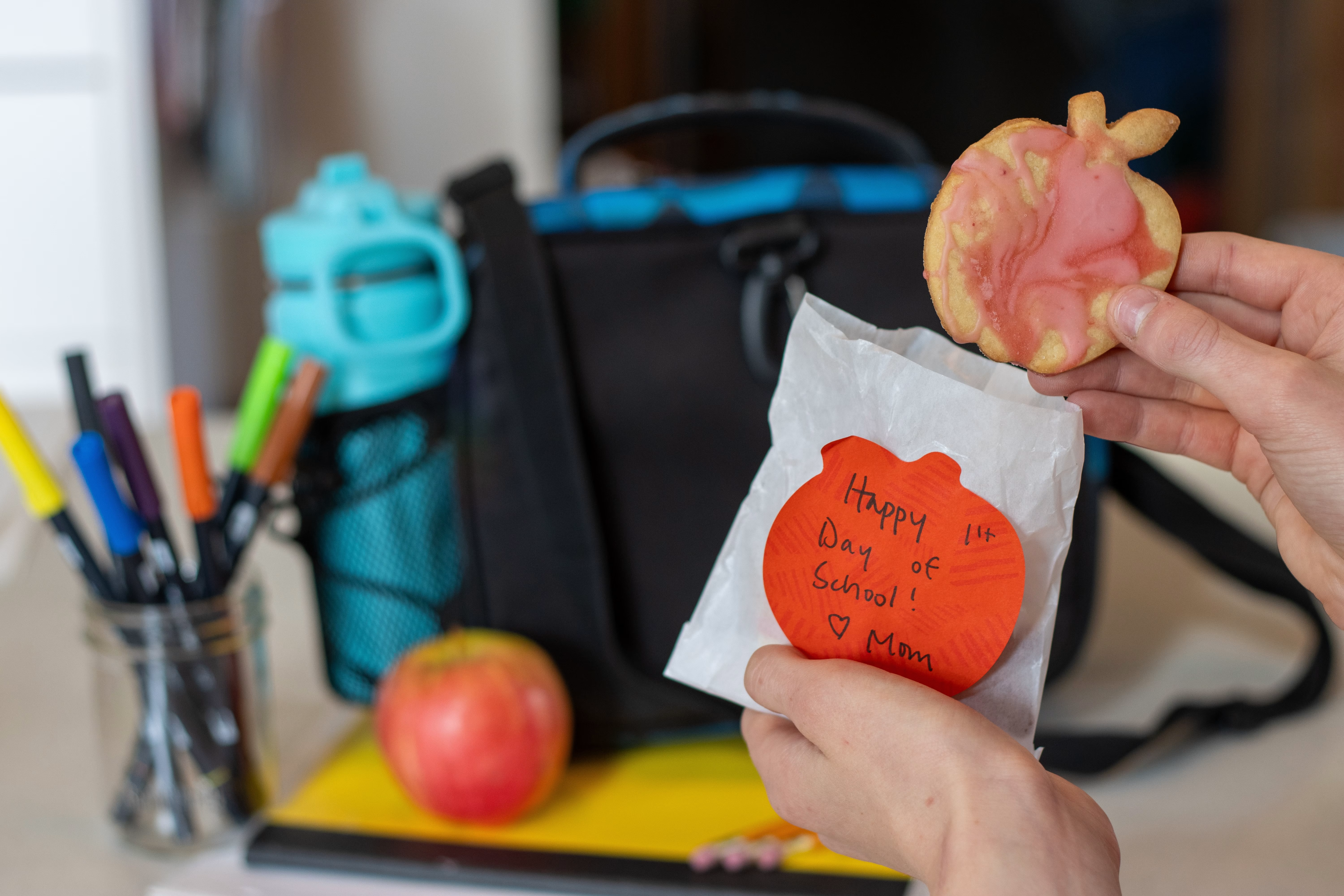
A short, encouraging note tucked into a backpack or lunchbox can mean more to a child than parents often realize. Keep the message simple and focused on connection rather than performance. Something like "I love you, have so much fun today, I can't wait to hear all about it" tells your child you're thinking of them without adding any pressure to have a "good" day academically or socially. This is one of the easiest ways to make the first day of school feel special, since it takes only a minute to write. Some families keep a small stack of first-day notes over the years, which can become a sweet thing to reread together once your child is older. If you have more than one child, consider writing a note specific to something you know they are looking forward to or nervous about, drawn from the answers they gave in their first-day interview.

A familiar bedtime story can become its own quiet back to school tradition. Whether it is a book specifically about starting school or simply a favorite that already feels like home, reading the same title (or the same type of story) the night before school starts can offer real comfort, especially for younger children in the pre-k and kindergarten phases. For children these ages, maintaining familiar routines during a period of change can ease some of the uncertainty that comes with it. Reading together also does more than soothe pre-first-day nerves. It supports language development, emotional connection, and a love of stories that carries into the classroom. If your child has a favorite book about their own family, even better. Seeing familiar faces and photos before a big transition can be its own small source of reassurance.
.gif)
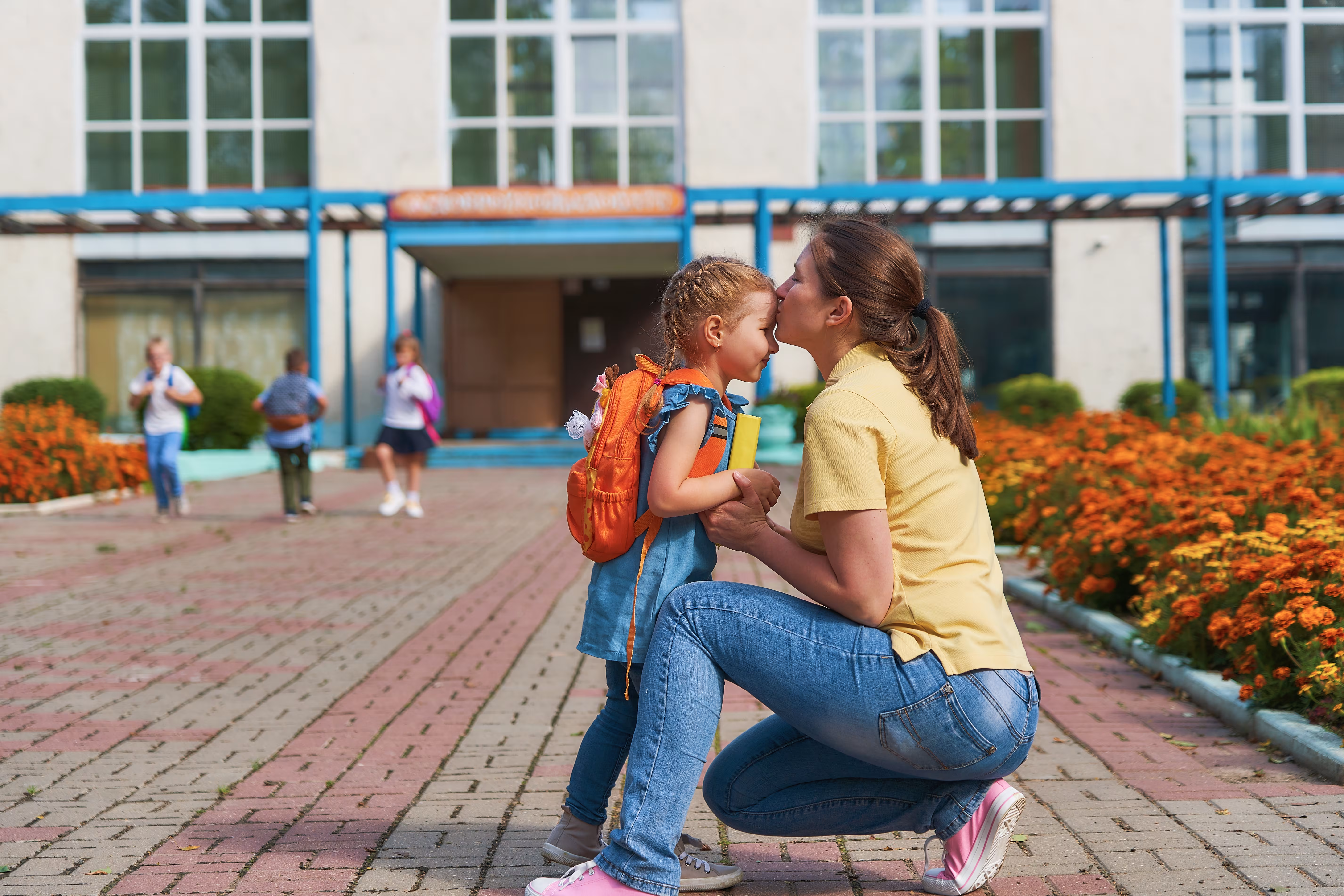
For many preschoolers and kindergarteners, the hardest part of the first day is not the classroom, the teacher, the new material, or the new faces. It is the moment of separation at drop-off. A simple, repeatable goodbye ritual, a special handshake, a phrase you always say, a specific hug-and-wave combination, can make that moment easier for both of you. The American Academy of Pediatrics, via HealthyChildren.org, notes that separation anxiety is a normal part of early childhood and that consistency around goodbyes can help ease the transition. The specific ritual matters less than its predictability. Once your child knows exactly what happens right before you leave, the unknown becomes a little smaller.
Quick Tip: Keep it brief. A drawn-out goodbye, however well-intentioned, can sometimes make the moment harder rather than easier. A quick, warm, and consistent goodbye ritual tends to work best, and it is one your child will likely remember fondly for years.
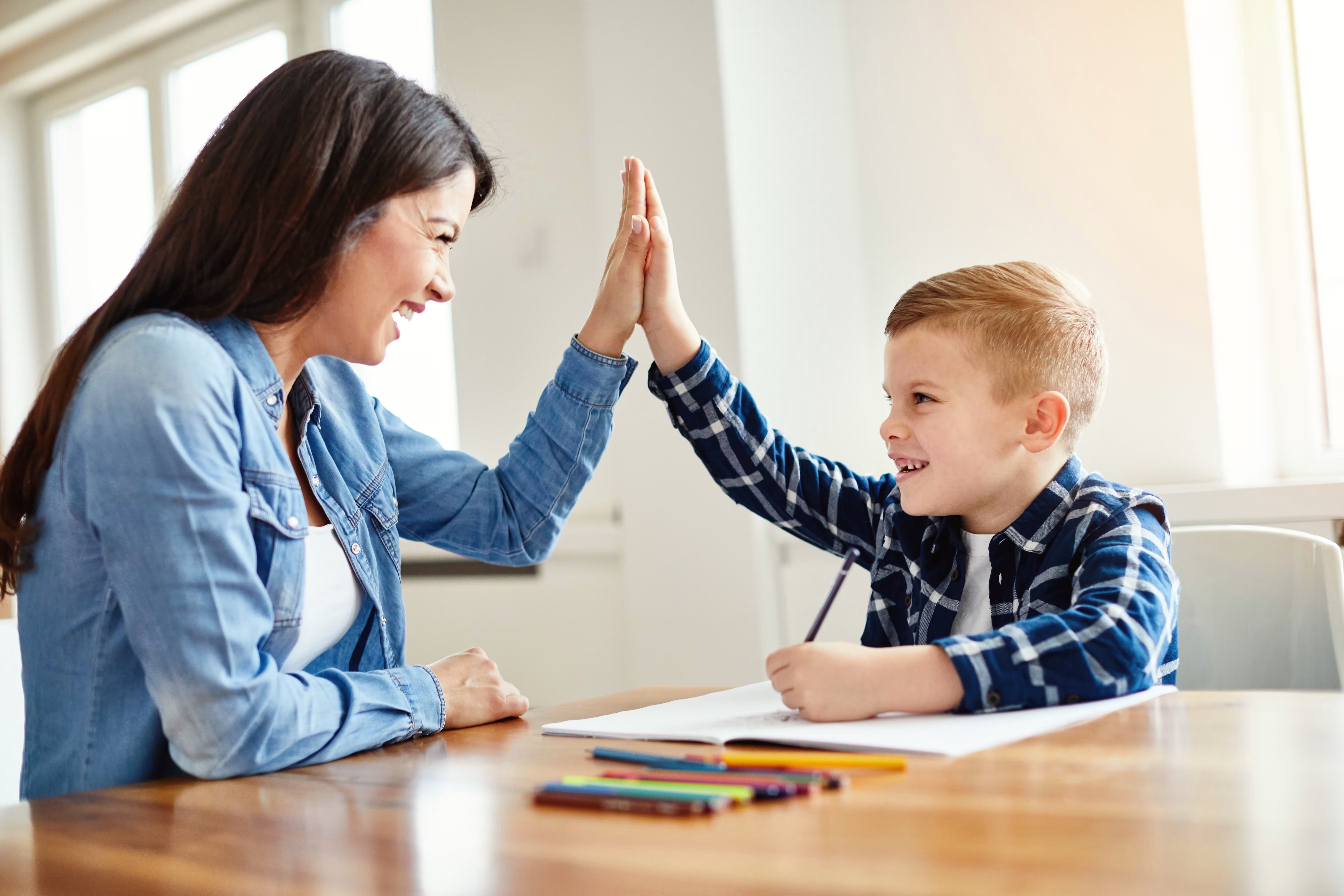
One of the most valuable shifts a parent can make during back to school season is choosing what to praise. Rather than focusing only on grades, gold stars, or "being the best," take time to recognize courage: trying something new, introducing themselves to a classmate, asking a teacher for help, being kind to someone who was alone, or simply walking into school on a day they felt nervous. This kind of praise matters more than it might seem. Research summarized by the Child Mind Institute has found that praising a child's effort and process, rather than their innate ability or achievements alone, tends to build resilience and a willingness to keep trying in the face of difficulty. A child who hears "I saw how hard you tried" internalizes something different than a child who only hears "you're so smart." Try to look for small, everyday moments of courage throughout the school year, not just on the first day. Naming them out loud, in the moment, helps your child start to recognize their own bravery too.
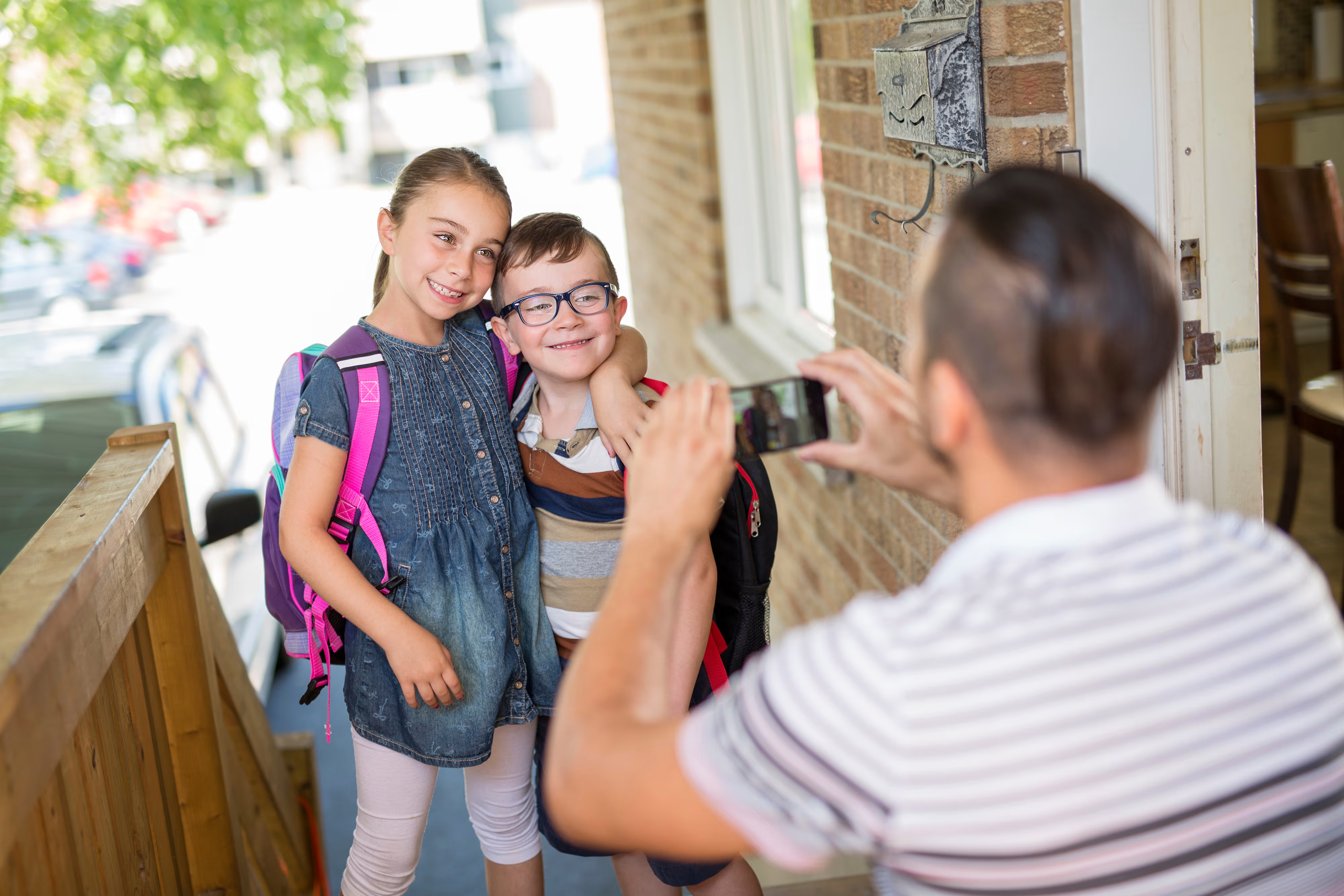
Take a similar photo, or ask the same interview questions, on both the first and last day of school. At the end of the year, sit down together and look at how much has changed: in height, in vocabulary, in confidence, in what they say they're proud of. This tradition makes growth tangible in a way that is hard to appreciate in the day-to-day rush of a school year. Children rarely notice their own progress in real time, but seeing two photos or two sets of answers side by side, months apart, gives them (and you) something concrete to point to. Keeping these comparisons together, even in a simple labeled folder, gives you something worth revisiting for years. Over the years, a folder of first-day and last-day comparisons becomes one of the most quietly powerful records a family can keep of childhood.
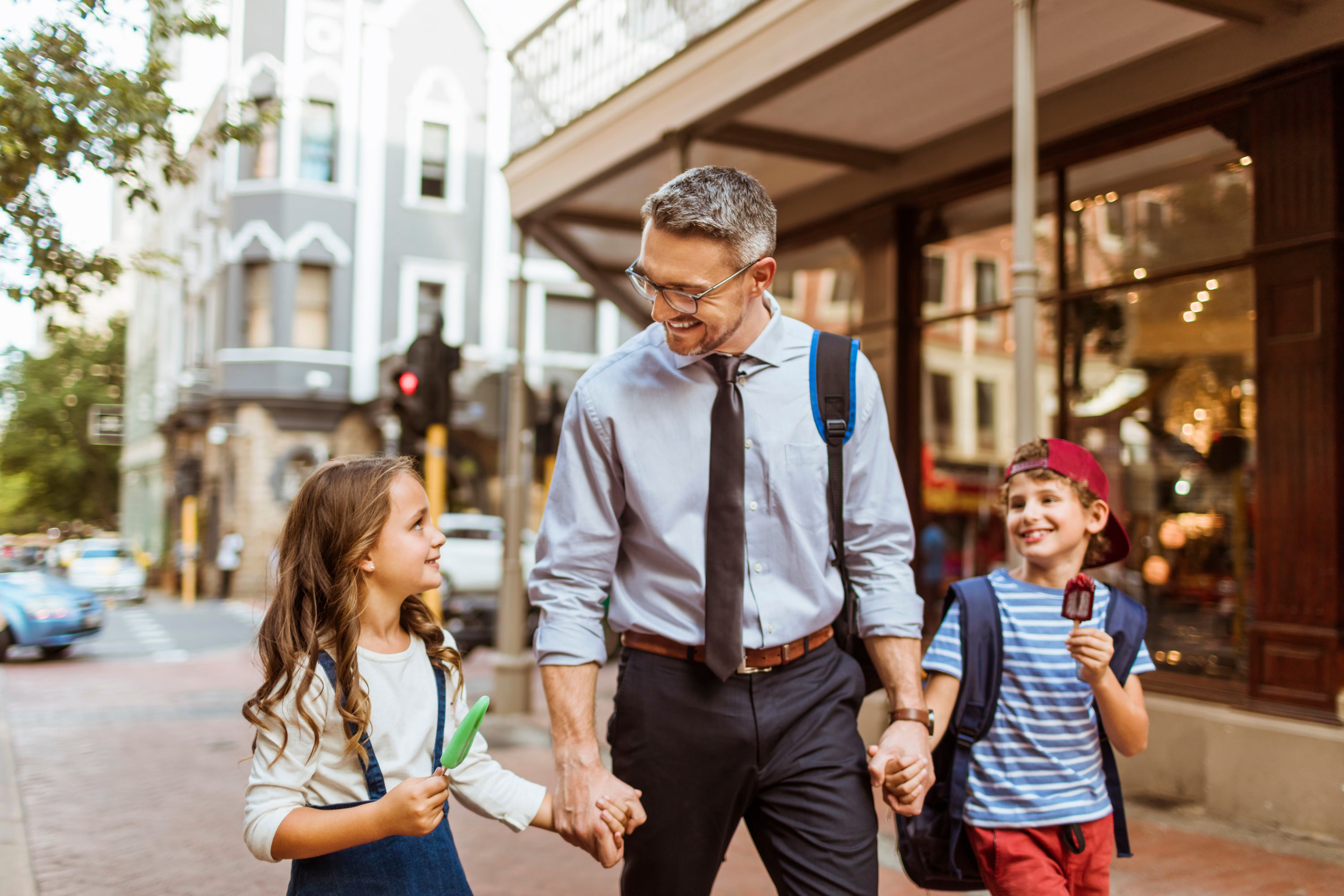
Rather than the classic (and often unproductive) "how was school?", set aside a regular moment each week, maybe Sunday dinner or a Friday afternoon snack, for a slightly more structured conversation about how school is going. Open-ended prompts tend to work better than yes-or-no questions:
These back-and-forth conversations do more than fill time— according to the Center on the Developing Child at Harvard University, responsive, back-and-forth exchanges between children and the adults who care for them help build the neural connections that support communication and social skills, a dynamic researchers describe as "serve and return." In other words, the conversation itself is doing real developmental work, even when it feels like ordinary dinner-table chat.
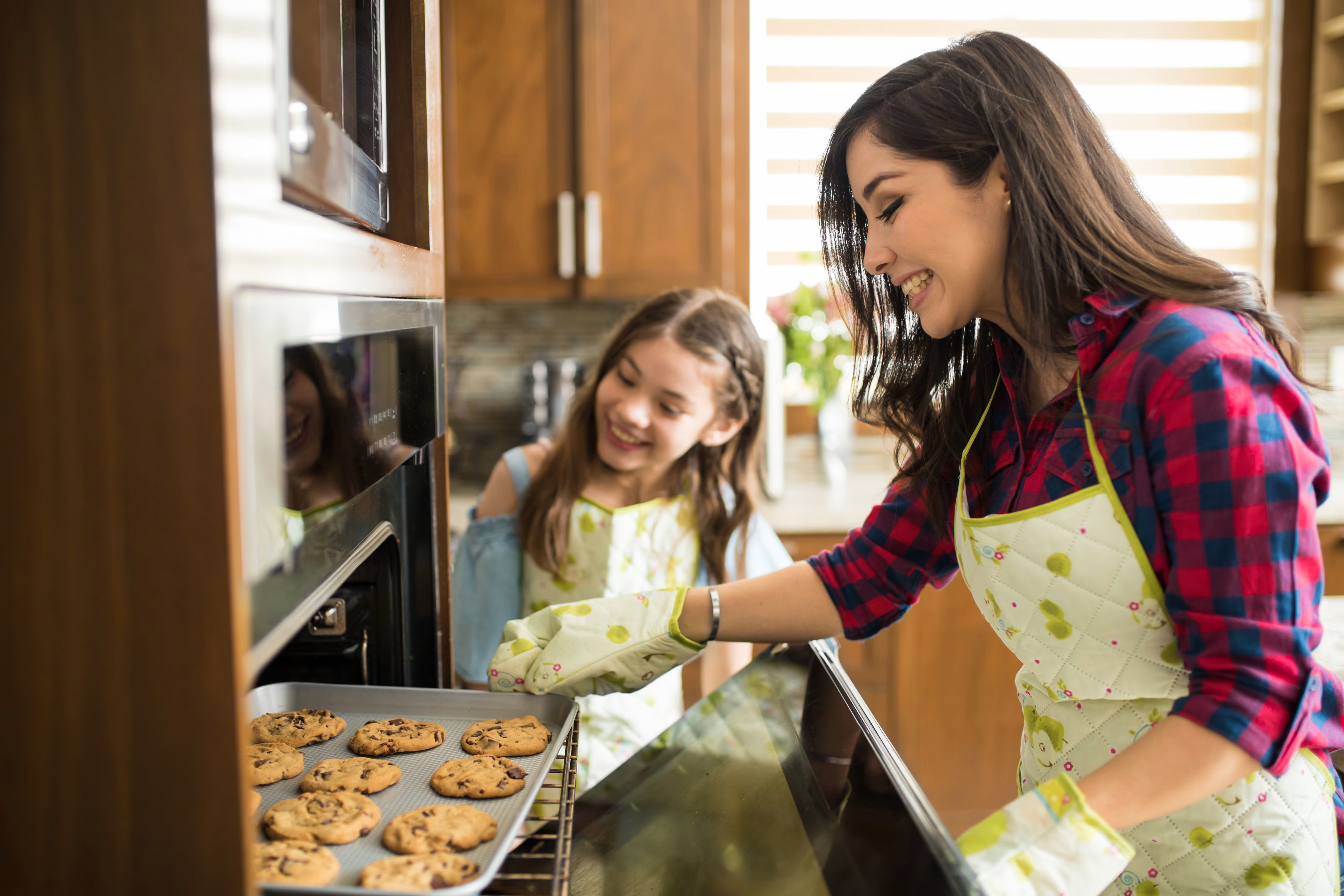
Celebrate the end of the first day with something simple your child can look forward to all summer: baking cookies, getting ice cream, a favorite snack, extra playground time, pizza for dinner, or letting them pick what the family eats that night. The specific tradition matters far less than its consistency. This is one of those back to school activities that requires almost no planning but tends to become deeply anticipated over time. Many parents find that their child starts asking about the after-school tradition weeks before school even starts, which is a good sign it has become genuinely meaningful rather than just another errand on a busy day. If your family already has a beloved treat or outing, consider simply designating it as the official first-day tradition going forward. Traditions do not need to be invented from scratch. Sometimes the best ones are already happening; they just need a name.

Keep a running note on your phone, or a small notebook in a kitchen drawer, for the funny things your child says throughout the school year: mispronunciations, unexpected observations, stories about their day that make you laugh out loud. These tiny, specific details are often the first things to be forgotten, long before the bigger milestones fade from memory. Unlike a first-day photo or an annual interview, this is an ongoing tradition rather than a single-day one. A quick note jotted down in the school pickup line takes seconds, but reading through a year's worth of these entries later can be one of the most joyful things a parent does. Many families find that these small, spontaneous quotes end up meaning more than almost anything else they saved that year.
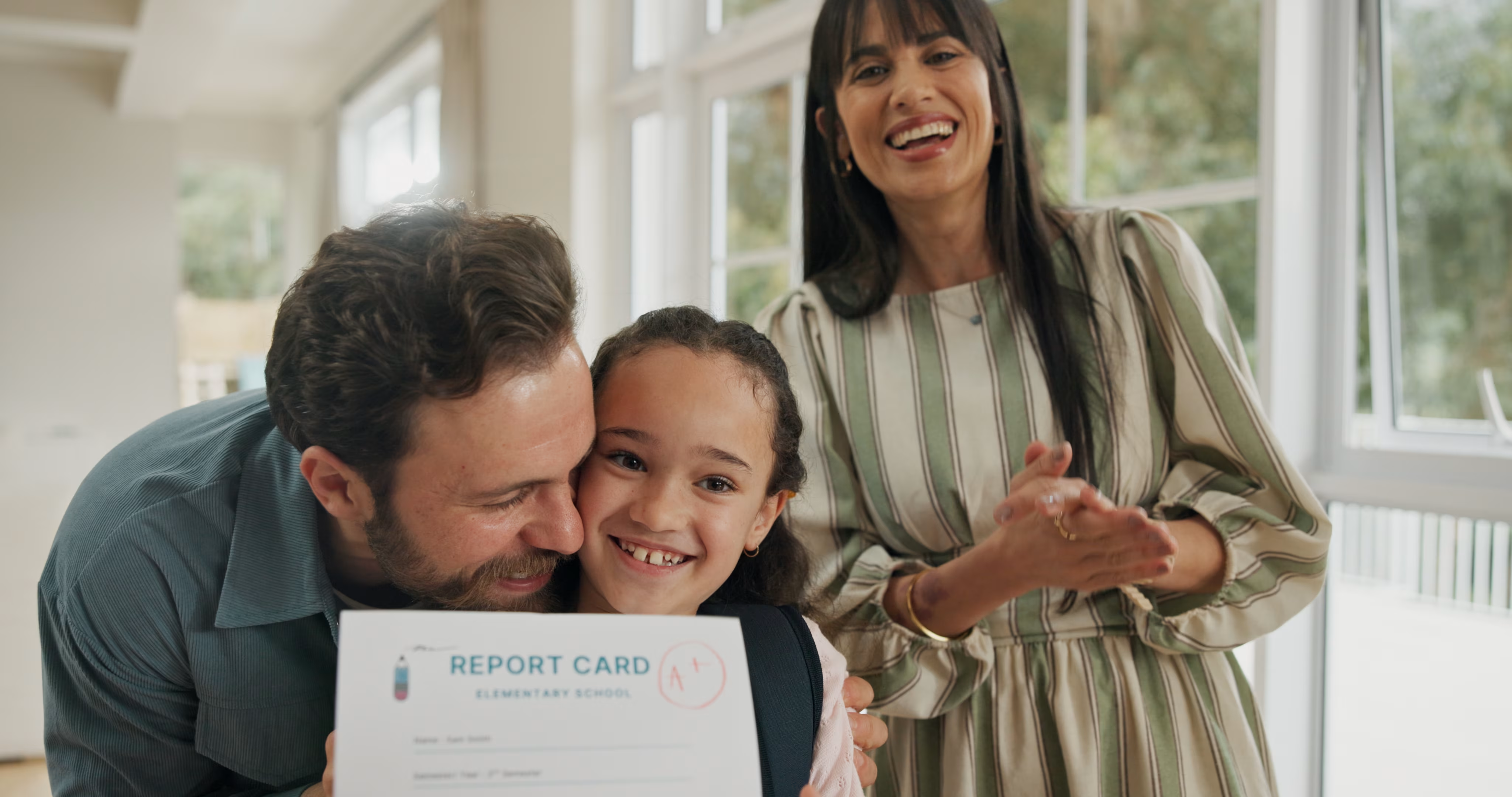
Rather than saving every worksheet and art project that comes home, be selective about what you keep. Look for the pieces that capture a moment in your child's development: their first attempt at writing their name, a self-portrait, a piece of writing that shows how their thinking is changing, a certificate, or a note from a teacher. Being selective is not about loving your child's work any less. It is about making sure the keepsakes you do save actually get looked at again, rather than disappearing into an overstuffed bin. A dedicated folder or box for each school year, with just a handful of standout pieces, tends to be far more meaningful than an attempt to save everything.
The first day of school is not the only milestone worth marking. Consider building small traditions around other moments throughout the year: a child's first school performance, the day they read independently for the first time, finishing a difficult project, making a new friend, or simply reaching the last day of the school year. Keep the emphasis on effort, growth, and personal milestones rather than grades or awards alone. A milestone worth celebrating might be as simple as "you asked for help when you needed it" or "you kept trying even when it was hard." These are the moments that shape how children see themselves over time, and they deserve just as much recognition as the traditional markers most families already celebrate. Remember, even just a little encouragement can go a really long way with young children.
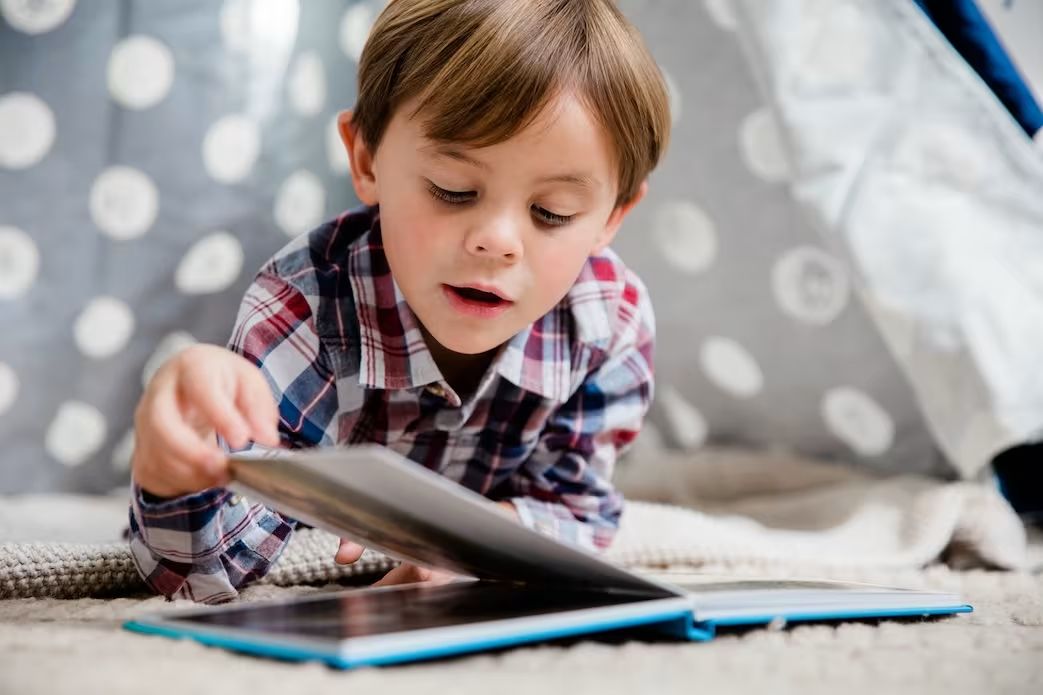
By the end of the school year, most families have a scattered collection of photos, a few keepsakes, some funny quotes, and a memory of how much their child has grown. This final tradition is about bringing all of it together: the photographs, the interview answers, the artwork, the milestones, and the small stories behind them. Photographs alone are valuable, but the stories behind those photographs are what give them lasting meaning. A photo of your child wearing an oversized backpack on their first day of kindergarten is sweet on its own. That same photo becomes something else entirely when it is paired with what they were excited about, what they were nervous about, who their friends were that year, and what they said they wanted to be when they grew up.
This is exactly the gap Stareworthy Custom Children's Books were built to fill. Rather than generic illustrations or an imagined story, Stareworthy books use your family's own real photographs and real experiences, paired with warm, rhyming, read-aloud text, to help preserve the moments and memories your family has already made. It is less about creating a new story and more about giving the story you already have a home your child can return to again and again, at bedtime, on a rainy afternoon, or years from now when they're curious about who they used to be.
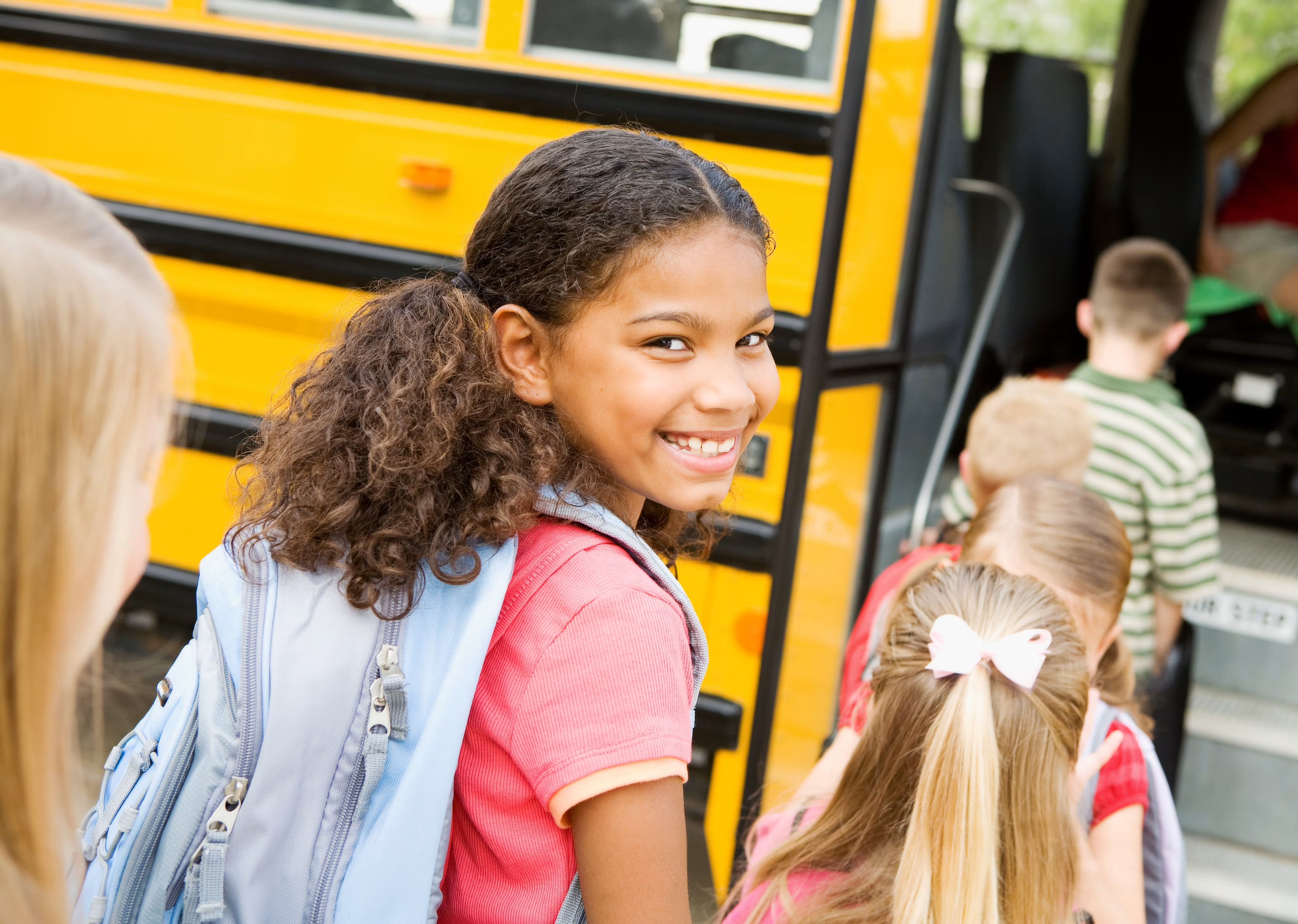
The photos you take this August will someday be the ones that show your family just how small your child once was, how big that backpack looked, how nervous or excited they were standing at the end of the driveway. Saving those photographs matters. Saving the stories behind them, the answers to a silly interview question, the funny thing they said in the car, the thing they were proud of, can make those memories mean even more.
You do not need to adopt all 15 of these back to school traditions this year. Choose one or two that genuinely fit your family, and let them grow from there. If you would like help turning this year's photos and stories into something your child can hold, revisit, and grow up with, explore how Stareworthy's custom photo story books can help your family preserve this school year, and every one that follows.
Simple traditions tend to work best. A special first-day breakfast, a consistent goodbye phrase at drop-off, or an after-school treat all take very little planning but become meaningful through repetition. You do not need an elaborate tradition for it to matter to your child.
Predictable routines can help ease the transition. A consistent goodbye ritual, a familiar bedtime story the night before, and calm, brief goodbyes at drop-off can all help. According to experts, separation anxiety is a normal part of early childhood development, and consistency tends to help more than a drawn-out goodbye.
Open-ended questions work best, since they encourage more than a one-word answer. Try asking what they're most excited about, what they're nervous about, who their friends are, and what they hope happens this year. Asking the same questions every year turns a simple conversation into a meaningful, evolving record.
Be selective. Choose a handful of standout keepsakes each year, such as a first attempt at writing their name or a piece of artwork that captures a moment in their development, rather than saving every paper that comes home. Pairing a few meaningful photos and keepsakes with the stories behind them tends to be more meaningful than an overflowing box of paperwork.
Family traditions and rituals give children a sense of predictability and belonging during moments of change. Repeated rituals and traditions can help children feel more connected to their family and better able to manage the uncertainty that often comes with new experiences, such as starting a new school year.
Stareworthy Custom Children's Books use your family's own real photos and real experiences, paired with rhyming, read-aloud text, to help you preserve the stories behind your child's school year in a keepsake they can revisit as they grow.