
Every family has a collection of stories worth preserving. Some are the big milestones, like welcoming a new baby or celebrating a graduation. Others are the little moments that quietly become the memories we treasure most, like Saturday morning pancake breakfasts, backyard adventures, bedtime snuggles, or an annual beach vacation.
The challenge is that these memories often live on our phones, scattered across cloud storage, or tucked away in old hard drives where they are rarely revisited. That's where a family memory book comes in!
Instead of letting those moments fade over time, a memory book turns them into something tangible that can be read, shared, and enjoyed for years to come. For young children especially, seeing themselves in books helps spark conversations about their own experiences, strengthens family connections, and gives them opportunities to revisit meaningful moments long after they've happened. Whether you're documenting your baby's first year, preserving annual family traditions, or creating a keepsake that spans generations, making a memory book is one of the most meaningful ways to tell your family's story.
A family memory book is a collection of photographs and stories that captures the experiences, relationships, and traditions that make your family unique. Unlike a traditional photo album, a memory book provides context for the images. Rather than simply displaying photos in chronological order, it tells the story behind them. It explains who was there, what happened, and why those moments mattered.
At Stareworthy, our memory books are designed specifically for families with young children. Instead of creating a scrapbook from scratch, parents simply upload their own photos into professionally designed books that preserve real memories in a format children love to revisit.
Although the terms are sometimes used interchangeably, family memory books and family history books serve different purposes. A family memory book focuses on your own experiences. It celebrates the moments your immediate family has shared together, whether that's a first birthday, a vacation, a season of childhood, or everyday life at home. A family history book looks further back. It often documents multiple generations, family ancestry, historical photographs, genealogy, and the stories of relatives who came before you. Both are wonderful keepsakes, but they tell different kinds of stories. A family history book preserves your family's past, while a memory book preserves the life you're living right now.
It's easy to assume we'll always remember the little things. The way your toddler insisted on wearing rain boots every day. The missing front teeth. The family dog who followed the kids everywhere. The bedtime routine that somehow became everyone's favorite part of the day. The only thing is, childhood can change so quickly. The details that feel unforgettable today often become fuzzy as the years pass. A memory book can give those moments a permanent home.
For children, these books can also become powerful tools for memory recall. Reading about familiar experiences and seeing themselves in photographs helps reinforce memories while encouraging conversations about family, emotions, traditions, and shared experiences. Parents often discover another unexpected benefit as well. Creating a memory book encourages them to pause and appreciate moments they might otherwise overlook. Looking back through hundreds of photos often reveals just how much joy exists in the ordinary days. Over time, these books become more than keepsakes. They become part of your family's bookshelf, read at bedtime alongside favorite storybooks and pulled out again years later to relive seasons of childhood that seemed to pass far too quickly.
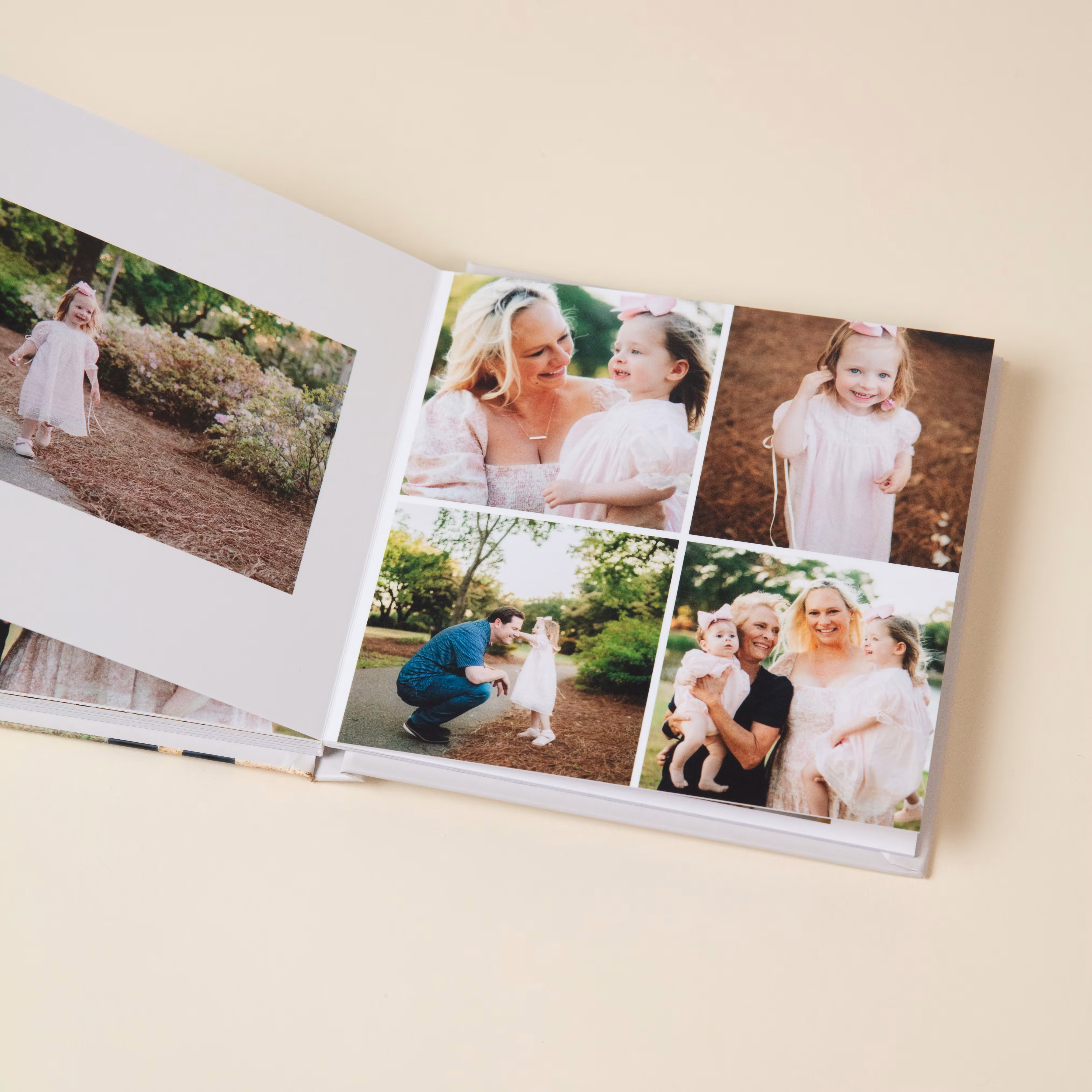
One of the biggest questions people have when making a memory book is what belongs inside.
The answer is simple: include the moments that matter most to your family.
That might mean milestone events, but it doesn't necessarily have to. Some of the most meaningful memory books are built around everyday experiences that might otherwise be forgotten.
Consider including photos of:
The goal isn't to include every photo you've ever taken. Instead, choose images that work together to tell a complete story. If you're creating one of Stareworthy's Memory Albums, think about how each page contributes to the overall narrative. The photos should flow naturally from one experience to the next so that reading the book feels like reliving the memories.
Before you begin designing your book, spend some time collecting everything you might want to include. Start by looking through your phone, computer, and cloud storage. You may be surprised by how many wonderful photos you've forgotten about. If your book spans several years, organize your images into folders before uploading them. Grouping photos by year, event, or season makes the design process much easier later on.
As you browse through your pictures, don't automatically choose only the technically perfect ones. A slightly blurry photo of genuine laughter often becomes more meaningful than a perfectly posed portrait. If you're creating a memory book that includes grandparents or extended family, ask relatives if they have photos you'd like to incorporate. You may discover images you've never seen before that add another layer to your family's story. While gathering photos, it's also helpful to jot down a few notes about the memories themselves. You don't need to write lengthy stories. Just recording where a trip took place, what your child loved about a particular day, or a funny quote they said can make the finished book even more meaningful.
A mistake people often make when creating a memory book is trying to include everything. Instead, try giving your book a clear focus. Many families choose to organize their books chronologically, telling the story of a year from beginning to end. Others prefer to center an entire book around one topic or season of life.
For example, you might create a book about:
At Stareworthy, many of our Story Books and Memory Albums are already thoughtfully organized around a particular theme, making the process even simpler. Rather than worrying about designing every page yourself, you can focus on selecting the photos that best tell your family's story. Once you've chosen your theme, think about the natural flow of the book. Each page should feel like it leads naturally into the next. Imagine reading it aloud with your child. Does the story progress in a way that feels engaging? Are the memories connected in a meaningful sequence? When your photos follow a clear narrative, your memory book becomes much more than a collection of pictures. It becomes a story your family will enjoy revisiting again and again.
The design of your memory book should enhance your family's story, not distract from it. One advantage of using professionally designed templates is that the layout has already been carefully planned to balance photographs, captions, and white space. Instead of worrying about graphic design, you can focus on choosing the images that best represent your memories. As you place your photos, vary the types of images throughout the book. Mix close-up portraits with wider family scenes. Include both candid moments and posed photographs. This creates visual interest while helping the story feel authentic.
Finally, remember that less is often more. Resist the temptation to squeeze every favorite photo onto a page. Giving each image room to breathe allows the memories to stand on their own and makes the finished book feel timeless rather than cluttered.
The photographs may be the heart of your memory book, but the small details are what make it truly personal. A simple caption can turn a beautiful photo into a lasting memory. Instead of writing only where or when a picture was taken, think about what made that moment special. Maybe it was your child's excitement before their first day of preschool, the joke that had everyone laughing at the dinner table, or the tradition your family looks forward to every holiday season. If you're creating a book with Stareworthy, you'll also have opportunities to include captions throughout the book. These brief notes help preserve the stories behind the photos while making the book even more meaningful as the years pass.
You can also highlight family sayings, funny moments, or little details you know you'll want to remember someday. Children have a wonderful way of saying things that seem unforgettable in the moment, but those memories have a way of fading faster than we expect. Including them in a memory book ensures they'll always have a place. As you write, imagine reading the book with your child years from now. What would you want them to know about this season of life? Those thoughtful details often become the most treasured part of the book.
One of the best things about creating family memory books is that there isn't just one way to do it. Every family has a different story to tell, and every book can celebrate a different chapter. Some families enjoy creating an annual memory album that documents everything from birthdays and vacations to everyday moments throughout the year. Looking back through a collection of yearly books becomes an incredible way to watch children grow. Others prefer to focus each book on a single experience. A family vacation album allows you to relive an unforgettable trip, while a baby's first year captures all of the exciting milestones that happen during those first twelve months.
Holiday traditions also make wonderful memory books. Whether it's decorating the Christmas tree, carving pumpkins every October, or spending Thanksgiving with extended family, these traditions become part of your family's identity. Preserving them in a book helps ensure they are remembered for generations. Many grandparents also appreciate receiving memory books that feature their grandchildren. A collection of visits, family celebrations, and everyday moments creates a gift that is both deeply personal and lasting. Whatever theme you choose, remember that the best books aren't necessarily about extraordinary events. They are about the people who make ordinary days feel extraordinary.
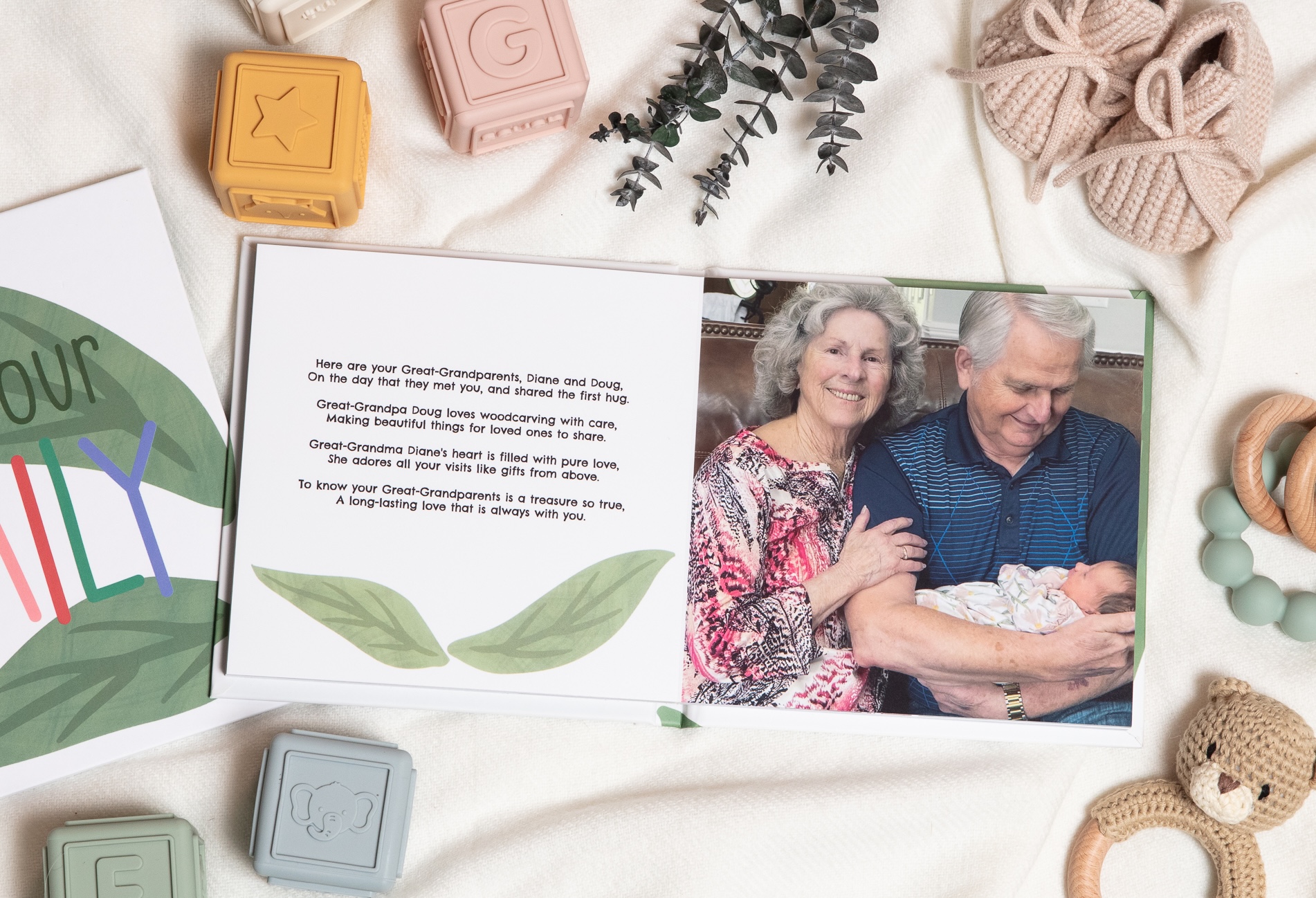
While memory books focus on your own family's experiences, some families also want to preserve the stories that came before them.
A family history book is an opportunity to document your family's roots, traditions, and heritage. It may include old photographs, stories passed down through generations, information about where relatives lived, military service, immigration stories, family recipes, or memorable life experiences. If you're interested in creating a family history book, begin by talking with older relatives while you still have the opportunity. Ask about their childhood, favorite memories, family traditions, and important life events. Record conversations or take notes so those stories aren't lost over time. Gather photographs from multiple generations and organize them into a timeline or by family branch. Even if you don't know every detail behind a photo, preserving it now gives future generations the opportunity to continue researching your family's story. Many families find that creating both a family history book and ongoing memory books provides the best of both worlds. One preserves the past, while the other documents the present.
Creating a beautiful memory book doesn't have to be difficult, but there are a few common mistakes that are worth avoiding.
One of the biggest is trying to include too many photos. While it's tempting to fit every favorite image into one book, overcrowded pages often feel overwhelming. Selecting fewer, more meaningful photos allows each one to have greater impact. Another common mistake is organizing photos without considering the story they tell. A memory book should feel cohesive, with one page naturally leading into the next. Even if your book isn't strictly chronological, readers should feel like they're following a meaningful journey. It's also easy to focus only on milestone events while overlooking everyday life. Yet many parents discover that years later, the ordinary moments become the ones they cherish most. A picture of baking cookies together or reading books before bed may become just as meaningful as birthday parties and vacations. Finally, don't wait too long to create your book. As months and years pass, it's surprisingly easy to forget the little details that gave each memory its meaning. Creating your memory book while those moments are still fresh helps preserve not only the photographs but also the stories behind them.
A memory book becomes even more valuable when it reflects the voices and experiences of the entire family. Invite older siblings to help choose their favorite photos or describe memories in their own words. Ask grandparents which family traditions they hope future generations continue. These shared contributions help make the finished book feel like a collaborative family keepsake. You can also use memory books to preserve traditions that might otherwise fade over time. Favorite recipes, annual vacations, birthday traditions, or seasonal activities all become part of your family's unique story. Capturing these experiences creates a record that future generations can revisit and continue. Many families discover that creating one memory book leads naturally to another. An annual tradition of documenting each year allows children to build an entire bookshelf of their own childhood, one story at a time. Years from now, those books won't simply remind your family what happened. They'll remind your children who they were, who loved them, and how their family's story unfolded. At Stareworthy, that's exactly why we create memory books. Childhood moves quickly, but the moments that shape it deserve to be remembered.
Include the moments that best tell your family's story. Vacations, birthdays, holidays, everyday routines, school milestones, family traditions, and candid moments all help create a meaningful keepsake. Rather than including every photo you have, focus on the images that work together to tell a complete story.
A family memory book focuses on your own family's experiences and everyday life, while a family history book documents previous generations, ancestry, historical photographs, and family heritage. Many families choose to create both as complementary keepsakes.
Begin by gathering your favorite photos and deciding on a theme for your book. Organize your images, choose the memories you want to highlight, and then build your book using a professionally designed template like Stareworthy's Memory Albums.
Photo books are one of the most meaningful ways to preserve family memories because they combine photographs with stories that children can revisit again and again. Creating books for annual family memories, vacations, holidays, or a child's early years are all wonderful ways to build a lasting collection.
The most common mistakes include overcrowding pages with too many photos, forgetting to add context through captions, overlooking everyday moments, and waiting too long to create the book. Choosing meaningful images and organizing them into a clear story will create a keepsake your family will enjoy for generations.